In development
The best work is never written down.
Raptrr turns demonstrations of skilled physical work into structured, interactive knowledge — so hard-won expertise stays with the people who need it next.
The stakes
When an expert leaves, their judgment leaves too.
A manual lists the steps. It rarely captures how the work should feel, what to check before moving on, or what to do when the situation is not the one in the book.
- Tacit knowledge
- The judgment built over years is hard to put into words, so it rarely gets written down at all.
- Continuity risk
- When an experienced worker retires, the reasoning behind their work can leave with them.
- The limits of recording
- Ordinary video shows what happened. It does not explain how, or why each decision was made.
From demonstration to structure
One recording, read as connected signals.
Raptrr reads a demonstration the way an apprentice would: the hands, the tools, the spoken reasoning, and the order of the work — all at once, and all connected.
How a demonstration becomes knowledge
Five stages, reviewed by experts.
From the moment of work to a learning experience an expert stands behind — nothing teaches until a person has confirmed it.
01
Capture the work
An expert performs the task on ordinary video, explaining as they go.
02
Interpret actions
Movement, tools, objects, speech, and sequence are read as connected signals.
03
Structure the procedure
The demonstration resolves into ordered steps, decisions, and checks.
04
Build a learning experience
Steps become an interactive procedure a learner can follow and question.
05
Review and improve
Experts confirm, correct, and refine before anything is used for training.
Concept interface
A demonstration, opened up.
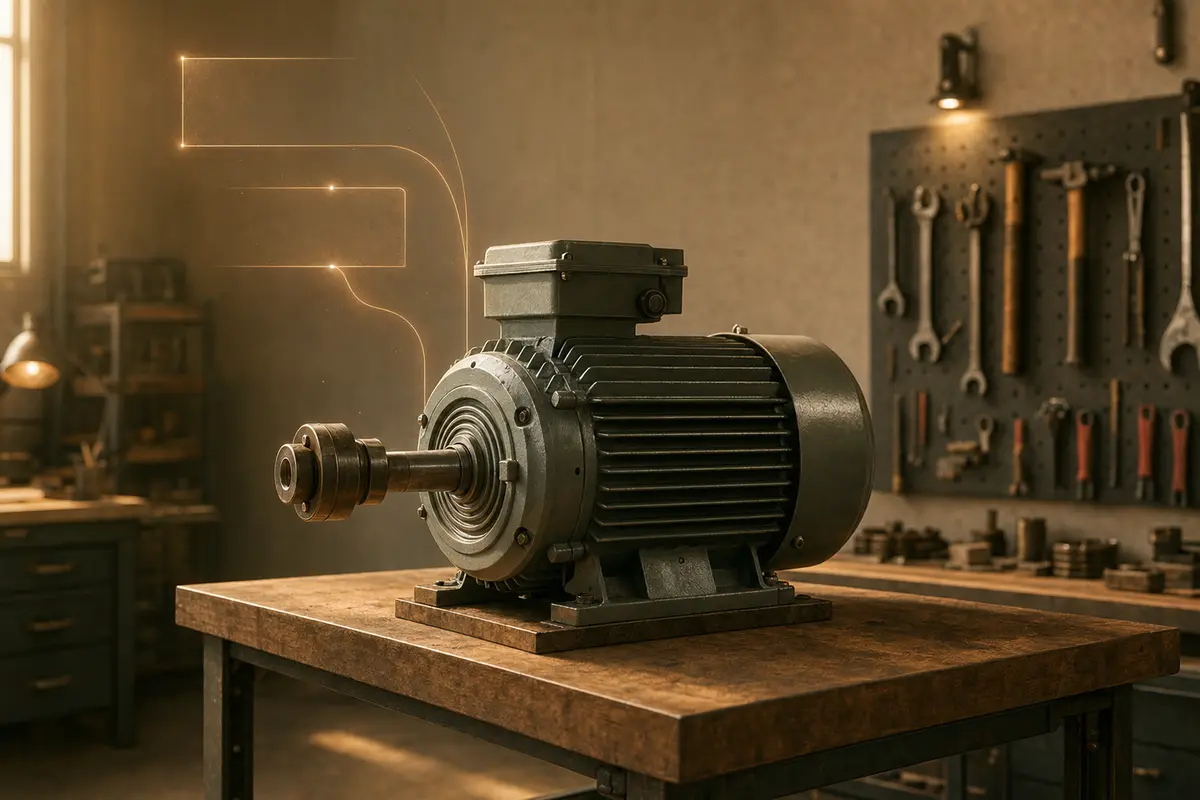
An illustration of how a structured procedure could look — the source demonstration beside the actions, tools, and checks read from it.
Step 01 / 05
ConfirmedIsolate and lock out
- Tool
- Lockout tag
- Component
- Terminal box
- Signal
- Detected: power isolation and lockout applied before contact.
First thing, always — prove it's dead before you touch it.
Safety checkpoint · isolation must be verified before any work begins.
Full procedure (text)
01 · Isolate and lock out
Tool: Lockout tag. Component: Terminal box. Confirmed: isolation verified with the panel de-energized. Safety checkpoint · isolation must be verified before any work begins. Spoken note: “First thing, always — prove it's dead before you touch it.”
02 · Inspect coupling alignment
Tool: Dial indicator. Component: Coupling. Confirmed: alignment check performed at the coupling. Spoken note: “I'm checking the coupling for any play before we go further.”
03 · Check bearing condition
Tool: Infrared thermometer. Component: Bearing housing. Confirmed: bearing checked by temperature and by sound. PPE checkpoint · hearing and eye protection while the machine is open. Spoken note: “Listen here — a dry bearing tells you before it fails.”
04 · Torque terminal connections
Tool: Torque wrench. Component: Terminal box. Needs expert review: confirm the torque value against the spec sheet. Spoken note: “To spec, not by feel. Loose terminals are how you get a callback.”
05 · Record and sign off
Tool: Inspection record. Component: Coupling. Reviewed: readings recorded and signed for the next technician. Spoken note: “Note the readings, sign it, and it's ready for the next person.”
What Raptrr pays attention to
Expert work has many dimensions.
A single step can hold a movement, a tool, a spoken reason, and a safety check in the same moment. These are the dimensions Raptrr is built to observe and connect.
- 01MotionHow the hands and body move through the task.
- 02SequenceThe order that matters, and the order that does not.
- 03ToolsWhich tool, held which way, at which moment.
- 04LanguageThe spoken reasoning that explains a decision.
- 05EnvironmentThe equipment, materials, and conditions in the scene.
- 06InspectionThe points where an expert stops to check the work.
- 07CorrectionWhat a mistake looks like, and how it is put right.
- 08SafetyThe checks that protect the person and the equipment.
- 09JudgmentThe experience that decides what to do when it depends.
- 01Industrial maintenanceInspection routines, servicing, and fault isolation on equipment few people fully understand.
- 02ManufacturingSpecialized assembly, calibration, and changeover knowledge held by senior operators.
- 03Skilled tradesMechanical repair, fabrication, and craftsmanship learned through years of practice.
- 04Field serviceDiagnosis and installation procedures performed alone, far from the nearest expert.
- 05AgricultureMachinery repair and locally developed practices passed down on the farm.
Human expertise remains primary
The expert is the source of the knowledge.
Raptrr is an observation and structuring layer, not a replacement for the person doing the work. Capture happens with consent, and every inferred step is meant for expert review before it teaches anyone anything.
How we think about responsibilityHelp preserve the knowledge behind skilled work.
We are looking for organizations with scarce or retiring expertise, industrial training teams, skilled professionals, and technology collaborators to shape early access.